What Does Finish Carpentry Mean?
A Homeowner’s Guide to the Final Stage That Makes a House Feel Like Home
If you’re building a home, or even just starting to look into the process, you’ve probably come across the term “finish carpentry.” Most people assume it just means trim work or the last few touches at the end of a job. That’s not wrong, but it doesn’t tell the whole story. Finish carpentry is the stage that takes a house that’s been built and turns it into something that actually feels like home. It’s where everything comes together visually, and where the quality of the work really starts to show.
At its core, finish carpentry is the final phase of interior work. It focuses on all the visible woodwork and the details you see and interact with every day. Unlike framing or structural work, there’s no hiding anything here. Every cut, every joint, every line is on display. When it’s done right, it looks clean, tight, and intentional. When it’s not, it stands out immediately.
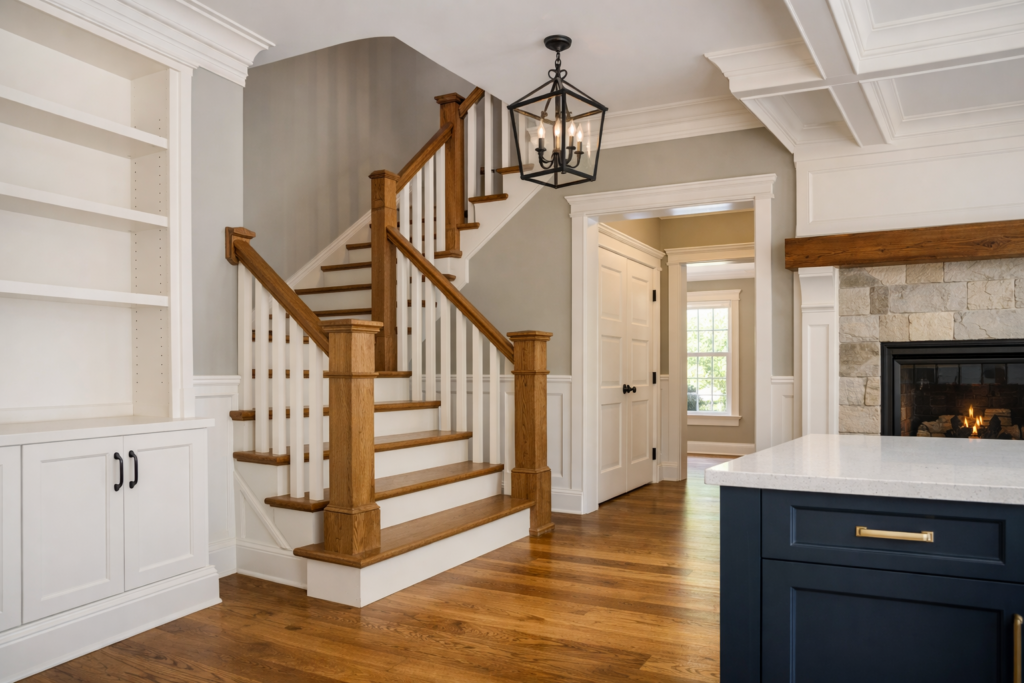
Finish carpentry covers more than most people realize. It includes all the interior trim like baseboards, door and window casings, crown moulding, and things like wainscoting or wall paneling. These are the details that really define the style of your home. It also includes doors and hardware. That means hanging the doors properly, setting the reveals, installing handles and locks, and making sure everything opens and closes the way it should. A well-installed door feels smooth and effortless. A poorly installed one will remind you every day that something’s off.
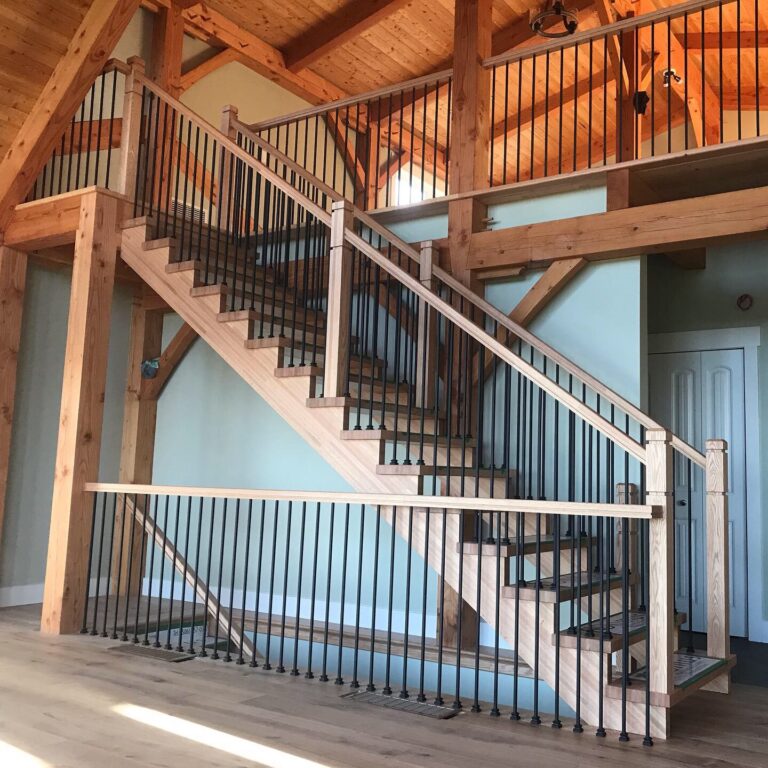
Staircases are another big part of finish carpentry, and one of the more complex areas. Skirt boards, treads, risers, handrails, posts, and balusters, there’s a lot that goes into building stairs properly. They need to be structurally sound, but also perfectly laid out and visually clean. Stairs are often one of the first things people notice when they walk into a home, so there’s no room for shortcuts here.
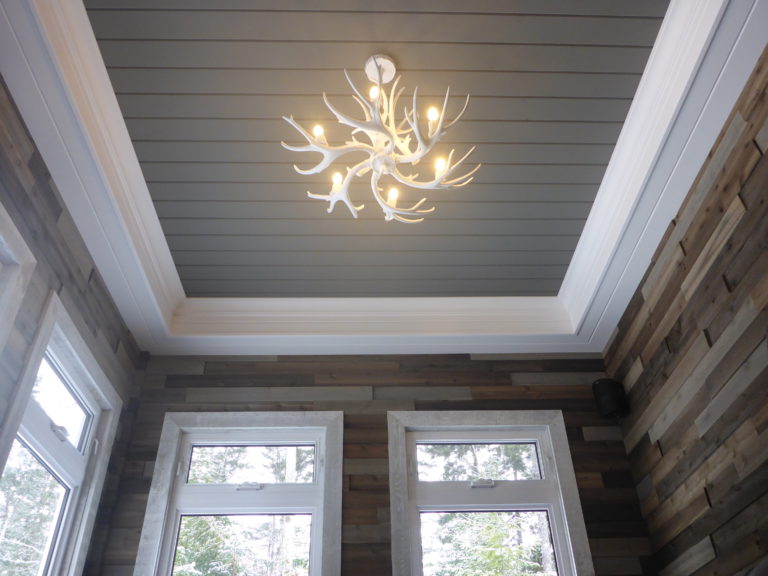
Then you have the custom elements. Built-ins, shelving, fireplace surrounds, feature walls and ceiling details like beams or tray ceilings. These are the pieces that take a home from standard to something that feels unique and well thought out. They’re also where craftsmanship really stands out.
What most homeowners don’t realize is just how much finish carpentry impacts the overall feel of their home. You can have a solid build structurally, but if the finishing work is sloppy, the entire place will feel cheap. On the other hand, when the finishing is done at a high level, it elevates everything around it. People might not always be able to explain why a home feels high-end, but more often than not, it comes down to the details.
First impressions are a big part of that. When someone walks into your home, they’re not seeing the framing or what’s behind the walls. They’re seeing the trim, the doors, the stairs, the lines. That’s what creates that immediate reaction. It also plays a role in long-term durability. Tight joints, proper installation, and understanding how materials behave over time all help prevent issues like cracking, warping, or doors that stop closing properly.
Finish carpentry is also one of the clearest indicators of overall quality. If the finishing details are rushed or inconsistent, there’s a good chance other parts of the build were treated the same way. It’s usually not an isolated issue.
A lot of the confusion comes from not understanding the difference between rough carpentry and finish carpentry. Rough carpentry is all the structural work. Framing walls, floors, roofs. It’s essential, but it’s mostly hidden once the house is closed in. Finish carpentry is the opposite. It’s the detailed, visible work that defines how the home looks and functions. One builds the structure, the other brings it to life.
Not all finish carpentry is created equal, and this is where the gap between average work and high-end craftsmanship really shows. Precision is a big part of it. Even being off slightly can be noticeable. Consistency is just as important. Even reveals around doors, straight lines, clean transitions. It all needs to feel uniform. There’s also a level of understanding that comes with experience, knowing how different materials move, how to fasten them properly, and how to work with them so they hold up over time. And then there’s the execution. Clean cuts, tight joints, no gaps, no shortcuts. The kind of work that looks simple, but only because it’s done right.
There are a few common mistakes homeowners make when it comes to this stage. The biggest one is choosing based on price alone. Finish carpentry is not the place to go with the lowest number. Lower pricing usually means less time spent, less attention to detail, and a result that reflects that. Another mistake is underestimating the scope. A lot of people don’t realize how much is actually involved until they’re in the middle of it. And then there’s the assumption that all trim work is the same. It’s not. There’s a big difference between basic installation and a high-end finish, both in the process and in the final result.
If you’re trying to figure out whether you’re looking at quality work, there are a few simple things to pay attention to. Look at the joints. Are they tight and clean? Check the gaps around doors and trim. Are they even? Do the lines look straight and level? Do the doors open and close smoothly? Does everything feel solid and well thought out? Those small things tell you a lot.
For us at Crown Custom Carpentry, this stage is everything. Finish carpentry isn’t just part of what we do, it’s what we specialize in. We pay attention to the details that most people might not notice right away, because we know those are the details that make the biggest difference in the long run. We don’t believe in “good enough.” We keep our job sites clean, we communicate clearly, and we hold ourselves to a higher standard every step of the way.
At the end of the day, finish carpentry is about more than trim or stairs. It’s what makes a home feel complete. It’s the difference between something that looks unfinished and something that feels done right. If you’re building, it’s worth taking the time to understand this stage and choosing the right people to handle it.
If you’re planning a new build in the Greater Moncton area and want your home finished to a higher standard, Crown Custom Carpentry is here to help. Your home deserves excellence.